Salsa Dancing: Embodied Culture and Transnational Community
Salsa dancing constitutes a complex cultural phenomenon that transcends its classification as mere recreational activity. As both artistic practice and social institution, salsa embodies the transnational flow of Latin American cultural forms, representing a dynamic synthesis of African diasporic traditions, Caribbean musical evolution, and contemporary global dance culture. The dance form's technical sophistication, cultural significance, and capacity for fostering transcultural connection merit serious scholarly and practical attention.
Historical Trajectory and Cultural Hybridization: Salsa's emergence in 1960s-70s New York City represents a paradigmatic example of cultural hybridity. Cuban son, Puerto Rican plena and bomba, Dominican merengue, and Colombian cumbia converged in urban Latino communities, creating a distinctly cosmopolitan form that maintained Caribbean roots while developing new characteristics. The term "salsa"—adopted by Fania Records for marketing purposes—successfully branded this musical-choreographic complex, facilitating its globalization. Contemporary salsa encompasses multiple codified styles: Cuban Casino with its circular rueda formations and Afro-Cuban body isolations; New York "on2" style emphasizing musicality and the tumbao rhythm; Los Angeles "on1" style incorporating theatrical elements and extended partnerwork; and Colombian style featuring rapid, intricate footwork. These regional variations reflect distinct cultural priorities and aesthetic sensibilities while maintaining recognizable salsa fundamentals.
Embodied Technique and Kinesthetic Awareness: Salsa's technical demands require sophisticated proprioception—the internalized sense of body position and movement in space. Dancers develop precise control over weight transfers, maintaining balance through continuous shifting while executing complex patterns. The characteristic Cuban motion, often simplified as "hip movement," actually results from proper weight transfer mechanics and requires years to master authentically. Advanced practitioners cultivate dissociation—the capacity to move upper and lower body independently—enabling simultaneous arm styling while maintaining lower body precision.
Musical Sophistication and Interpretive Freedom: Elite dancers demonstrate remarkable musicality, moving beyond mechanical step execution to embody musical structure. This requires understanding the clave as organizational principle, recognizing instrumental montunos and percussion patterns, and interpreting melodic phrasing through movement dynamics. Advanced musicality involves strategic use of syncopation, intentional pausing during musical breaks, and phrasing that mirrors the song's architecture. Some dancers develop such refined sensitivity that observers describe their movement as musical visualization.
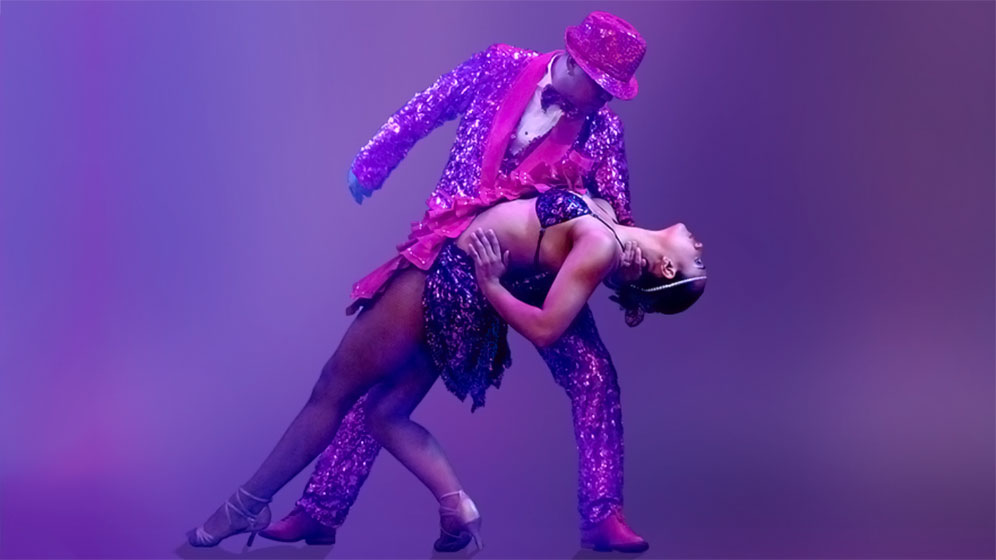
Social Choreography and Embodied Communication: The lead-follow dynamic represents a sophisticated nonverbal communication system requiring mutual attentiveness and responsiveness. Effective leading involves clarity, timing, and respect for the follower's comfort and capability. Skilled following requires active interpretation rather than passive compliance, with followers making instantaneous decisions about movement quality and personal styling. This partnership negotiation occurs continuously, with dancers adjusting connection, timing, and complexity based on mutual feedback. The system's sophistication becomes apparent when considering the diversity of combinations—from simple cross-body leads to complex multiple turns, dips, and tricks—all communicated through subtle physical cues.
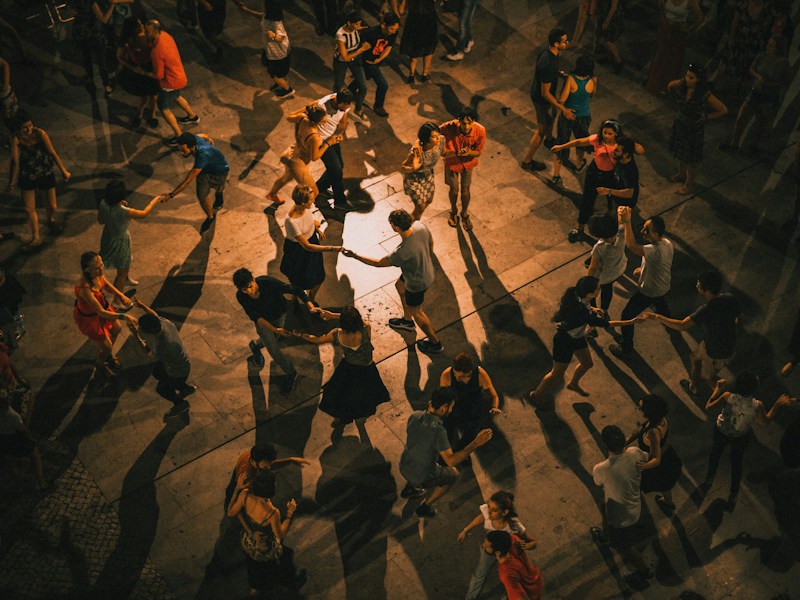
Transnational Community and Cultural Capital: The global salsa scene constitutes a transnational community united by shared practice despite geographic dispersion. International congresses and festivals create nodes of intensive interaction where participants from dozens of countries converge. These events facilitate cultural exchange, technique transmission, and community reinforcement. Within this community, dancers accumulate various forms of capital: technical proficiency, musical knowledge, social connections, and recognition from peers. The scene's democratic ethos—emphasizing social dancing over performance, encouraging cross-level interaction, and valuing personality alongside technique—distinguishes it from more hierarchical dance communities. Yet tensions exist regarding authenticity, commercialization, and the relationship between salsa's Latin American roots and its global manifestations. These dynamics raise questions about cultural appropriation, authenticity politics, and the evolution of traditional forms in transnational contexts. Nonetheless, salsa's capacity to create meaningful connection across cultural boundaries—transforming strangers into dance partners and fostering communities transcending national identity—demonstrates dance's potential as a vehicle for intercultural understanding and embodied cosmopolitanism.