

Power Fantasies

Push, Pull & What We Really Want

Select Your Level

A2
Elementary
★★
B1
Intermediate
★★★
B2
Upper-Intermediate
Powered by MIM Language Services

Power Fantasies

Level: B1 (click to change)

Power Fantasies

Push, Pull & What We Really Want

What Is a Power Fantasy?

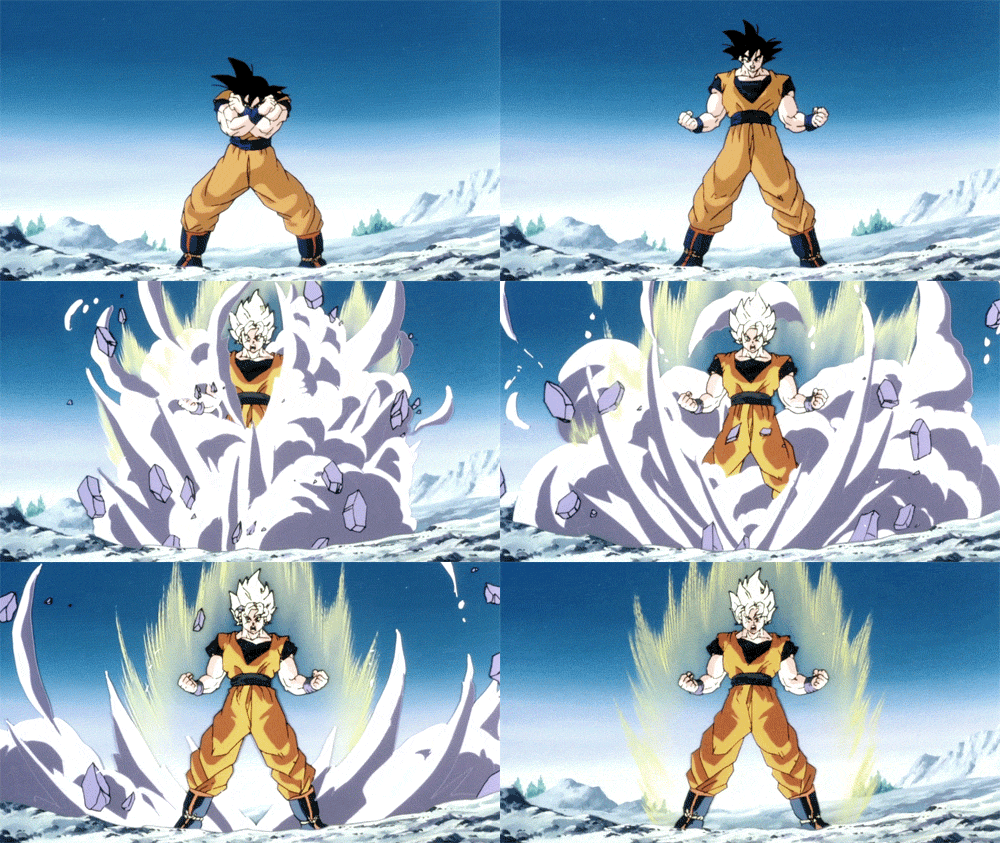
A power fantasy is a story, game, or daydream where the main character has everything they want — strength, control, beauty, or special skills. In a power fantasy, you feel powerful and important.

These stories are very popular in movies, TV shows, video games, and books. Most people enjoy them because they let us imagine a world where we get exactly what we want.

Researchers have noticed something interesting: men and women often enjoy different kinds of power fantasies. Men often imagine pushing their power onto the world. Women often imagine pulling the world toward them, like a magnet.

A power fantasy is a narrative — in film, television, literature, or gaming — that fulfils a deep desire for control, recognition, and security. Rather than simply meaning superhuman strength, it is fundamentally about agency: the feeling that you shape the world around you.

Cultural researchers have noted a consistent pattern. Male-coded fantasies tend to revolve around "Push" — projecting force or skill onto the world. Female-coded fantasies tend to revolve around "Pull" — an irresistible gravitational pull that draws the world toward the protagonist.

These two modes are not opposites — they are reflections of the same underlying need.

The "power fantasy" as a cultural category describes narrative structures designed to fulfil specific psychological deficit states — principally the absence of control, recognition, and safety in daily life. Rather than constituting mere wish fulfilment, these narratives function as sophisticated compensatory mechanisms.

Cultural analysts have identified a durable bifurcation along gendered lines: male-coded fantasies typically adopt a "Push" dynamic — projecting force, competence, or dominance outward onto a resistant world. Female-coded fantasies typically adopt a "Pull" dynamic — becoming the gravitational centre around which powerful others orbit.

This distinction, while not universal or deterministic, reflects measurable patterns in media consumption and is analytically useful for understanding cultural production.

Ripple Effect

The Male Power Fantasy: Push

The most popular male power fantasies are about strength, skill, and not needing anyone. Here are the most common types:

  • The Unstoppable Hero: The main character walks into a room and is immediately the most dangerous person there. Examples: John Wick, Doom, God of War.
  • The Reluctant Protector: A quiet, strong man who just wants to be alone, but uses his special skills to protect someone weak or innocent. Examples: The Mandalorian, The Last of Us.
  • The Unappreciated Genius: The smartest person in the room, ignored by everyone — until he is proved right. Examples: House, The Big Short.
  • The Underdog: A weak, ordinary character who discovers a hidden power and becomes the strongest of all.

The common theme: the hero does things alone, through skill or force. The world bends to him.

Male power fantasies cluster around several archetypes, all sharing a "Push" dynamic — exerting force or skill onto the world:

  • The One-Man Army: Absolute physical mastery and complete self-reliance. Walking into danger as the most lethal entity present (e.g., John Wick, Doom Guy).
  • The Reluctant, Valued Protector: The stoic loner whose dangerous skills are uniquely needed to protect the innocent — a weapon with a moral code (e.g., The Mandalorian, The Last of Us).
  • The Vindicated Genius: Dismissed and underestimated, but ultimately proved completely right. The fantasy of intellectual dominance and delayed recognition (e.g., House, The Big Short).
  • The Zero-to-Hero: Starting from absolute rejection, discovering a hidden power, and ascending to master everyone who once doubted him.

The core fantasy: reshaping the world through what you can do.

Male-coded power fantasies converge on a "Push" paradigm — the fantasy of exerting force, competence, or will onto an external environment. This paradigm fragments into several well-documented narrative archetypes:

The Unstoppable One-Man Army represents the fantasy of absolute physical security and complete self-sufficiency. The Reluctant, Valued Protector combines lethality with moral righteousness, resolving the tension between the desire for isolation and the need to be needed. The Vindicated Genius maps onto the desire for intellectual hegemony and belated recognition. The Zero-to-Hero structure is arguably the most compensatory form — a direct narrative response to experiences of social marginalisation.

The common structural feature is directed agency: the world changes because of what the protagonist does.

Complex Dynamic Systems

Grammar: Comparison & Contrast

When we talk about similarities and differences between things, we use special language:

Contrast: but / while / however / whereas / on the other hand
"Men often imagine pushing power onto the world, while women often imagine pulling the world toward them."
Similarity: both... and / similarly / also / in the same way / just like
"Both male and female power fantasies are about feeling safe and being seen."
Careful opinions: I think... might / could / may...
"I think these stories might reflect what people are missing in real life."

Discussing cultural patterns requires precise contrast language alongside careful hedging:

Formal contrast: whereas / in contrast to / while both X and Y share...
"Whereas male fantasy centres on exerting force on the world, female fantasy centres on becoming its gravitational centre."
Hedging: tend to / often / are frequently associated with / appear to
"Male power fantasies tend to revolve around directed action, whereas female power fantasies often involve social gravity."
Concession: While these patterns are not universal...
"While these patterns are not universal, they are consistent enough to be analytically useful."

Sophisticated cultural analysis requires a toolkit that goes beyond simple contrast:

Concessive hedging: While it would be reductive to suggest that...
"While it would be reductive to suggest that all male power fantasies conform to the 'Push' paradigm, the pattern is sufficiently consistent to merit analytical attention."
Partial similarity: Both X and Y ultimately... though... differ markedly
"Both paradigms ultimately fulfil the same psychological need for safety and recognition, though the narrative mechanisms by which they do so differ markedly."
Nominalisation: verb/adjective → noun phrase for analytical register
"Men prefer Push dynamics" → "The documented male preference for Push-type narratives"
Writing and Grammar

The Female Power Fantasy: Pull

The most popular female power fantasies are very different from male ones. Instead of fighting, the main character is so special that the world comes to her. Here are the most common types:

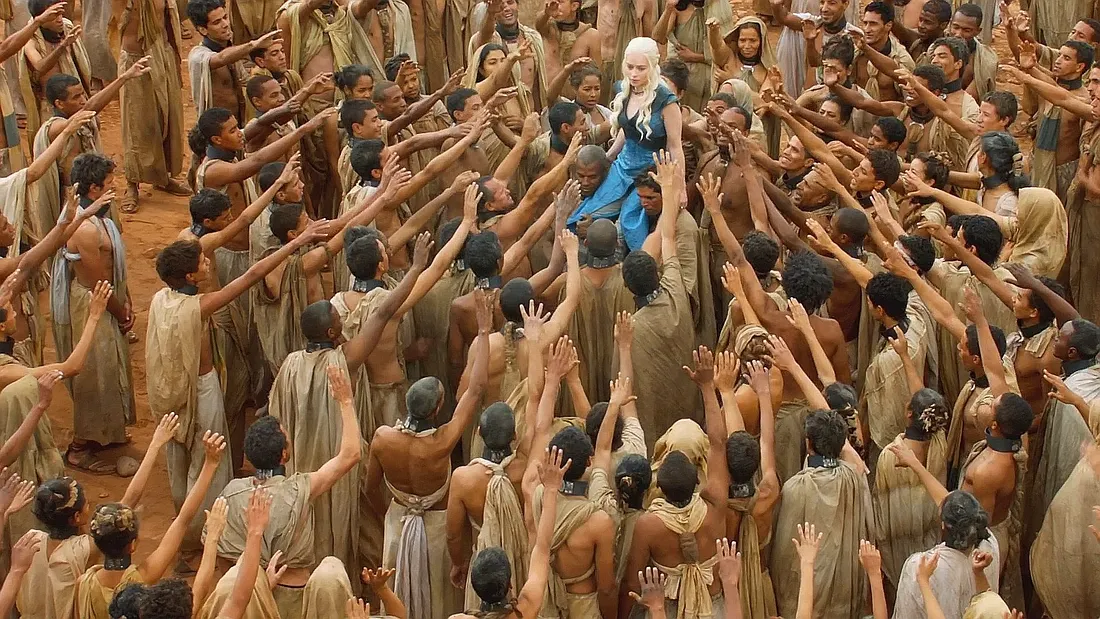
  • The Centre of the Universe: Two or more powerful, handsome men compete for the main character's love. She doesn't have to try — she is simply irresistible. Examples: Twilight, many K-Dramas.
  • The Hidden Princess: A girl who seems ordinary is actually secretly special — maybe magical, or of royal blood. One day, the whole world sees her true value. Example: Cinderella stories, A Court of Thorns and Roses.
  • The Effortless Queen: She walks into a room and immediately shifts the social atmosphere. Her style and confidence make everyone want to impress her. Example: The Devil Wears Prada.
  • The Monster Tamer: She falls in love with the most dangerous, untouchable man — but she alone can soften him.

The common theme: you are so special that the world reorganises itself around you.

Female power fantasies are organised around a "Pull" dynamic — becoming the irresistible gravitational centre that draws powerful others in. Key archetypes include:

  • The Axis of Desire: Two high-status men compete intensely for the protagonist's attention. She does not pursue — she is pursued. The fantasy is unconditional, competitive adoration (e.g., Twilight, many K-Dramas).
  • The Hidden Royalty: Underestimated or mistreated, but possessing hidden specialness that eventually forces even the powerful to bow (e.g., A Court of Thorns and Roses).
  • The Unbothered Sovereign: She enters a room and the social landscape shifts without her lifting a finger — magnetically dominant (e.g., The Devil Wears Prada).
  • The Monster Tamer: She falls for the most dangerous man alive and is uniquely capable of softening him — the fantasy of supreme emotional power over someone lethal to everyone else.

The core fantasy: reshaping the world through who you are.

Female-coded power fantasies converge on a "Pull" paradigm — the fantasy of becoming the social and emotional gravitational centre around which powerful others organise themselves.

The Axis of the Universe trope enacts the fantasy of unconditional competitive adoration without requiring active agency from the protagonist. The Hidden Royalty archetype functions as a narrative of inherent specialness: social hierarchies are not conquered but revealed to be already misaligned with the protagonist's true value. The Monster Tamer is perhaps the most analytically interesting: it maps the fantasy of supreme emotional power onto an asymmetric relationship, with the protagonist holding the unique capacity to access the vulnerability of someone dangerous to all others. This constitutes a form of emotional hegemony that mirrors, at the relational level, the competence-dominance fantasy of male archetypes.

The common structural feature is attributed agency: the world changes because of who the protagonist is.

Gravitational Pull

The Common Ground

Male and female power fantasies look very different. But at their heart, they want exactly the same three things:

  • To be seen: "Other people notice me and understand my real value."
  • To be needed: "The world needs me specifically — no one else can do what I do."
  • To be safe: "I am protected from danger and nothing bad can hurt me."

Men often imagine building a wall to keep danger out. Women often imagine rewriting the rules so that danger turns into protection.

The fantasy is different. The need behind the fantasy is the same.

Discussion: Can you think of a movie or TV show that fits one of these patterns?

Despite their surface differences, male "Push" and female "Pull" fantasies fulfil the same three fundamental psychological needs:

  • The need to be seen: To be recognised for your true value — not overlooked, dismissed, or underestimated.
  • The need to be desperately needed: To be irreplaceable — the only person who can do what you do or provide what you provide.
  • The need to be safe: To be protected from the chaotic, unpredictable dangers of the world.

The method differs: men tend to fantasise about building walls to keep chaos out through force or skill; women tend to fantasise about rewriting the rules of chaos itself through social influence and emotional power.

Discussion: Which of these fantasies do you find more appealing — or do you identify with elements of both?

The apparent binary opposition of "Push" and "Pull" paradigms dissolves upon structural analysis. Both serve as narrative solutions to identical psychological deficit states:

  • Invisibility anxiety — the fear of not being seen or valued — is resolved by the male fantasy through irrefutable competence, and by the female fantasy through irresistible captivation.
  • Dispensability anxiety — the fear of being replaceable — is resolved by the male fantasy through unique lethality or genius, and by the female fantasy through the unique capacity to tame or transform a powerful other.
  • Vulnerability anxiety — the fear of being hurt — is resolved by the male fantasy through domination of the environment, and by the female fantasy through being so central that even the chaos protects rather than threatens.

The gendered vehicle differs; the psychological destination is identical. This suggests that the fantasy gap reflects culturally conditioned modes of imagining the fulfilment of universal needs, rather than fundamentally different desires.

Common Ground

Power Fantasies in Media & Culture

Power fantasies appear in almost every type of media. Can you find the pattern?

  • Action Movies: One hero against the world — the male "Push" fantasy. Examples: John Wick, Mission Impossible, any superhero film.
  • Romance Films & K-Dramas: Everyone competing for one person's love — the female "Pull" fantasy.
  • Video Games: Games like God of War or Call of Duty follow the male "Push" pattern. Games like The Sims often follow more social, personal fantasies.
  • Social Media: Influencer culture often follows the "Pull" fantasy — someone so special and magnetic that millions of people want to watch their life.

Can you think of examples from your own country's media? Do these patterns exist in your culture too?

Power fantasy patterns appear across all media formats, but their prevalence differs significantly by genre:

  • Cinema: Action and superhero films are almost universally structured around male "Push" archetypes — the competent, self-reliant hero reshaping events through force or skill.
  • Romance fiction & K-Dramas: Heavily structured around female "Pull" archetypes — the irresistibly captivating protagonist who attracts powerful, devoted men.
  • Video games: RPGs with level-up mechanics reflect Zero-to-Hero male fantasy structures. Social simulation games often reflect more relational, "Pull"-adjacent fantasies.
  • Social media: Influencer aesthetics frequently mirror "Pull" dynamics — the effortlessly special person whose existence draws admiration without apparent effort.

Discussion: Are these patterns universal, or do different cultures produce different fantasy structures? Can you identify examples from your own cultural context?

The gendered power fantasy binary has significant explanatory power for understanding patterns in cultural production and consumption. The dominance of "Push" archetypes in commercially dominant genres — action cinema, first-person shooters, superhero narratives — reflects and reinforces specific constructions of hegemonic masculinity, creating feedback loops between cultural aspiration and narrative supply.

Similarly, the commercial dominance of romance fiction and "dark romance" structured around "Pull" archetypes speaks to persistent demand for fantasies of irresistible specialness and emotional power over dangerous men. The question of causality is contested: do these media reflect pre-existing desires, or do they actively construct and amplify them? Critical media theory suggests the relationship is reciprocal — media both reflects and shapes the psychological landscape it appears to describe.

Discussion: To what extent do power fantasy patterns transcend cultural context?

Media and Culture

Key Takeaways & Discussion

Let's review what we learned today:

  • A power fantasy is a story where the main character has exactly what they want
  • Men often prefer "Push" fantasies: being the strongest, smartest, or most skilled
  • Women often prefer "Pull" fantasies: being the most special, irresistible, or important
  • Both fantasies are really about the same needs: to be seen, needed, and safe

Discussion questions:

  • Can you think of a movie, book, or game that fits one of these patterns?
  • Do you think these patterns are the same in your country's media?
  • Is there a power fantasy that appeals to you personally?

Core conclusions:

  • Power fantasies are not just about physical power — they are about agency, recognition, and safety
  • Male "Push" fantasies and female "Pull" fantasies look different but fulfil the same psychological needs
  • These patterns appear consistently across media genres and cultures — though they are not universal rules
  • Recognising these patterns can help us understand why certain stories feel deeply satisfying even when they are unrealistic

Discussion questions:

  • Why do you think media producers continue to use these archetypes? What does this tell us about audiences?
  • Is there something problematic about power fantasies? Do they distort our expectations of real life?
  • Can you think of modern examples that challenge or subvert these patterns?

Salient conclusions:

  • The "Push/Pull" binary describes durable, culturally persistent patterns in gendered media consumption that admit of rigorous structural analysis
  • Both paradigms function as compensatory mechanisms addressing shared psychological deficit states: invisibility, dispensability, and vulnerability anxiety
  • The reciprocal relationship between media and psychological aspiration makes causality difficult to establish — media both reflects and constitutes the desires it appears to serve
  • Critical engagement requires holding both the psychological validity of the need and the ideological implications of the narrative solution simultaneously

Discussion questions:

  • Does the concept of gendered power fantasies risk essentialising gender by mapping universal psychological needs onto binary categories?
  • How do intersecting identity markers — class, race, nationality — complicate the "Push/Pull" model?
  • What would a power fantasy look like that fulfils needs for visibility, irreplaceability, and safety without relying on conventional gender archetypes?
Ripple Effect

Lesson Complete!

Continue Your Learning

Vocabulary Flashcards

Power Fantasy
Click to see definition
A story or daydream where the main character has special power, control, or is extremely important to others
Agency
Click to see definition
The feeling that you are in control of your own life and choices
Archetype
Click to see definition
A very typical example of a type of character that appears again and again in stories across different cultures
Protagonist
Click to see definition
The main character in a story, film, or game
Stoic
Click to see definition
A person who does not show pain or emotion, even in very difficult or painful situations
Underdog
Click to see definition
Someone who is not expected to succeed, but tries hard anyway and often rises to the top
Trope
Click to see definition
A common idea, character type, or story pattern that appears in many different films, books, and games
Irresistible
Click to see definition
So powerful or attractive that it is impossible to resist or refuse
Hyper-competence
Click to see definition
The fantasy of being extraordinarily skilled or capable, far beyond what is realistically possible
Vindication
Click to see definition
The feeling of being proved right after being doubted, dismissed, or underestimated by others
Social Architecture
Click to see definition
The way a person designs, controls, or shapes the relationships and social hierarchies around them
Gravitational Pull
Click to see definition
The metaphorical force that draws people irresistibly toward a person, as if they were a planet with its own gravity
Compensatory
Click to see definition
Something that makes up for a lack or loss in another area; fulfilling an unmet need through a different means
Stoicism
Click to see definition
The practice of enduring difficulty, pain, or strong emotion without showing weakness or vulnerability
Archetype
Click to see definition
A recurring character model or story pattern that appears across many cultures, genres, and time periods
Irresistible
Click to see definition
So powerfully attractive or compelling that resistance is psychologically or emotionally impossible
Wish Fulfilment
Click to see definition
The process by which fiction satisfies desires that cannot easily be met in real life, providing vicarious pleasure
Psychological Compensation
Click to see definition
Using fantasy, fiction, or behaviour to address unmet psychological needs for recognition, safety, or belonging
Narrative Archetype
Click to see definition
A recurring character model that fulfils a specific psychological function for audiences across cultures and time periods
Hegemonic Masculinity
Click to see definition
The dominant cultural ideal of what it means to be a man, which shapes both male behaviour and media representation
Gravitational Centre
Click to see definition
The metaphorical idea of a person who draws everything and everyone around them without exerting force
Deficit State
Click to see definition
A psychological condition in which a fundamental human need — for recognition, safety, or belonging — remains unmet
Reciprocal Relationship
Click to see definition
A connection in which two things mutually influence each other, without causality running in only one direction
Epistemic Modality
Click to see definition
Language that signals how certain or uncertain a speaker is about a claim (e.g., might, appears to, has been suggested)

Interactive Quiz

Question 1 of 8

Writing Practice

Writing Task: Analysing a Power Fantasy in Media

Choose a film, TV show, book, or game that you know well. Analyse it using the concepts from today's lesson: does it follow a "Push" (male) or "Pull" (female) power fantasy pattern? Which archetypes does it use? What psychological needs does it fulfil for its audience?

Use comparison and contrast language and modal hedging in your response. For example: "It could be argued that... whereas... This might suggest..."

Try to present at least two perspectives — one explaining why the fantasy appeals to audiences, and one questioning whether it reflects or distorts real expectations. Aim for 150–250 words.