






HIV & AIDS
Understanding the Virus, the Science, and the Progress
What Are HIV & AIDS?
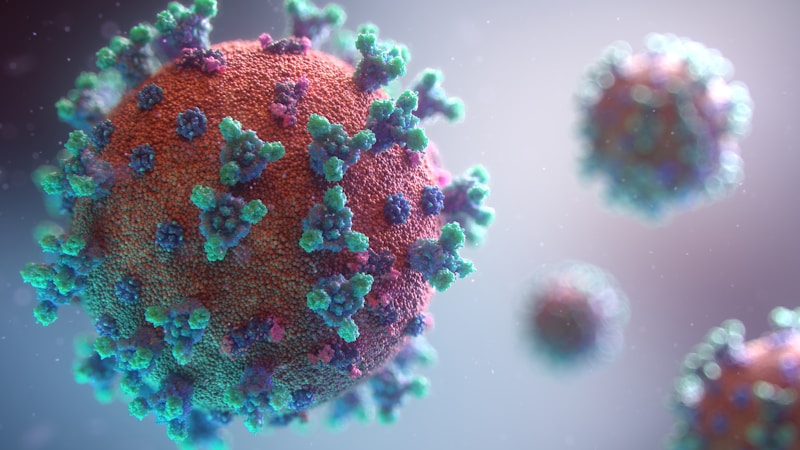
HIV stands for Human Immunodeficiency Virus. It is a virus that attacks the body's immune system — the part of the body that fights illness.
AIDS stands for Acquired Immunodeficiency Syndrome. AIDS is the most serious stage of HIV infection. A person with AIDS has a very weak immune system and can get sick very easily.
Important: HIV and AIDS are not the same thing. A person can live with HIV for many years without developing AIDS, especially if they take treatment.
HIV (Human Immunodeficiency Virus) is a retrovirus that specifically targets CD4 cells, which are critical components of the immune system. As the virus destroys these cells over time, the body becomes increasingly vulnerable to infections and diseases.
AIDS (Acquired Immunodeficiency Syndrome) is not a separate disease but the most advanced stage of HIV infection. A person is diagnosed with AIDS when their CD4 cell count falls below 200 cells per cubic millimetre, or when they develop certain opportunistic infections. With modern antiretroviral therapy, many people with HIV never progress to AIDS.
HIV (Human Immunodeficiency Virus) is a lentivirus — a subgroup of retroviruses — that targets the adaptive immune system, specifically CD4+ T-lymphocytes, macrophages, and dendritic cells. The virus integrates its genetic material into the host cell's DNA, establishing a persistent and currently irreversible infection.
AIDS (Acquired Immunodeficiency Syndrome) represents the terminal clinical stage of untreated HIV infection, characterised by severe immunodeficiency (CD4 count below 200 cells/mm³) and the emergence of opportunistic infections and malignancies. The distinction between HIV and AIDS is fundamental: HIV denotes the aetiological agent, whereas AIDS describes a clinical syndrome — a distinction often conflated in public discourse, contributing to widespread misconceptions about prognosis and transmission.
How Is HIV Transmitted?
HIV can only be passed from one person to another in certain ways. The main ways of transmission are:
- Unprotected sex with a person who has HIV
- Sharing needles with an infected person (for drugs or tattoos)
- Mother to baby during pregnancy, birth, or breastfeeding
- Contact with infected blood (very rare today, as blood is now tested)
HIV CANNOT be spread through: hugging, kissing, shaking hands, sharing food or drinks, mosquito bites, or using the same toilet.
HIV transmission requires contact with specific bodily fluids from an infected person: blood, semen, pre-seminal fluid, rectal fluids, vaginal fluids, and breast milk. The virus must come into contact with a mucous membrane, damaged tissue, or enter the bloodstream directly.
- Sexual contact: The most common route globally — unprotected vaginal or anal intercourse carries the highest risk
- Shared injection equipment: A significant route among people who inject drugs, due to direct blood-to-blood contact
- Vertical transmission: From mother to child during pregnancy, labour, or breastfeeding — now largely preventable with medication
- U=U: People on effective antiretroviral therapy with an undetectable viral load cannot sexually transmit HIV
HIV transmission is governed by a precise set of biological conditions: the virus must be present in sufficient concentration within specific bodily fluids and must access the bloodstream of an uninfected individual via mucous membranes, open wounds, or direct injection.
- Sexual transmission: Accounts for approximately 80% of new infections globally — risk varies significantly by type of sexual contact, co-existing STIs, and viral load of the positive partner
- Parenteral exposure: Sharing of injection apparatus facilitates direct haematogenous transmission; nosocomial transmission is now exceedingly rare in resource-rich settings due to stringent screening protocols
- Vertical transmission: Perinatally or through lactation — modern prophylaxis regimens have reduced mother-to-child transmission rates to below 1% in well-resourced settings
- The U=U paradigm: Validated by landmark studies including HPTN 052, PARTNER, and Opposites Attract — individuals on effective antiretroviral therapy who achieve sustained undetectable viral load pose effectively zero risk of sexual transmission
A Brief History of the Epidemic
The story of HIV is one of the most important chapters in modern medicine:
- 1981: Doctors in the United States noticed a strange new illness. Many young men were getting very sick with rare diseases
- 1983: Scientists discovered the virus that causes AIDS. It was later named HIV
- 1987: The first medicine for HIV, called AZT, was approved. It helped, but had many side effects
- 1996: New combination treatments called "cocktails" made it possible for people with HIV to live much longer
- Today: Over 39 million people worldwide are living with HIV, but medicine has improved greatly. People with HIV can now live long, healthy lives
The history of HIV/AIDS is marked by tragedy, scientific breakthroughs, and political activism:
- 1981: The US Centers for Disease Control (CDC) published its first report on unusual cases of pneumocystis pneumonia among previously healthy young men — the first documented evidence of the epidemic
- 1983-84: The virus was isolated independently by teams in France and the United States, leading to a contentious dispute over credit and patent rights for the diagnostic blood test
- 1987: AZT (zidovudine) became the first antiretroviral drug approved by the FDA. Its initial price — approximately $10,000 per year — sparked outrage and fuelled activist movements like ACT UP
- 1996: The introduction of Highly Active Antiretroviral Therapy (HAART) transformed HIV from a death sentence into a manageable chronic condition
- 2000s-present: Generic drug manufacturing dramatically reduced treatment costs. International initiatives like PEPFAR expanded access to millions in developing countries
The HIV/AIDS pandemic constitutes one of the defining public health crises of the modern era:
- 1981: The CDC's Morbidity and Mortality Weekly Report documented clusters of Pneumocystis carinii pneumonia and Kaposi's sarcoma among homosexual men — the epidemiological harbinger of the most devastating pandemic of the late twentieth century
- 1983-84: Luc Montagnier's team at the Pasteur Institute and Robert Gallo's laboratory at the NIH independently isolated the causative retrovirus, precipitating a protracted Franco-American dispute over scientific priority and patent royalties
- 1987: Azidothymidine (AZT), originally developed as an anti-cancer agent, received FDA approval — its exorbitant pricing catalysed unprecedented patient activism, epitomised by ACT UP's campaign against pharmaceutical profiteering
- 1996: The advent of combination antiretroviral therapy (cART) constituted a paradigm shift, reducing mortality by over 80% in treated populations
- 2001-present: The Doha Declaration on TRIPS and Public Health affirmed developing nations' right to issue compulsory licences for essential medicines, enabling the mass production of generic antiretrovirals — a pivotal moment in the intersection of intellectual property law and global health equity
Medical Breakthroughs & Treatment
Medicine has come a long way since the 1980s. Here are the most important things to know about HIV treatment today:
- ART (Antiretroviral Therapy): People take a combination of medicines every day. These drugs stop the virus from making copies of itself
- Patented drugs: When a company creates a new medicine, it owns the patent. Only that company can sell the drug, often at a very high price
- Generic drugs: After the patent ends, other companies can make the same medicine much cheaper. This has saved millions of lives in poorer countries
- PrEP: A pill that people who do NOT have HIV can take to prevent infection. It is very effective when taken correctly
The evolution of HIV treatment represents one of the greatest achievements in modern pharmacology:
- Antiretroviral Therapy (ART): Modern ART typically involves a combination of drugs that target various stages of the HIV life cycle. When taken consistently, ART reduces the viral load to undetectable levels, preserving immune function and preventing transmission
- The patent debate: Pharmaceutical companies argue that patents fund research and development. Critics counter that patents create artificial monopolies, keeping life-saving medicines unaffordable in the most affected regions
- The generic revolution: Countries like India became the "pharmacy of the developing world," producing high-quality generic antiretrovirals that reduced annual treatment costs from over $10,000 to under $100
- PrEP and PEP: Pre-Exposure Prophylaxis (PrEP) and Post-Exposure Prophylaxis (PEP) offer highly effective pharmaceutical tools for prevention
The pharmacological response to HIV exemplifies both the extraordinary capacity of biomedical science and the structural contradictions of global pharmaceutical governance:
- Combination antiretroviral therapy (cART): Contemporary regimens employ multi-class drug combinations — typically integrase strand transfer inhibitors (INSTIs) with nucleoside reverse transcriptase inhibitors (NRTIs) — achieving viral suppression in over 90% of adherent patients. Single-tablet regimens have revolutionised adherence
- Intellectual property and access: The tension between pharmaceutical patent protections under the TRIPS Agreement and the imperative of universal access exemplifies a fundamental conflict in global health governance. The 2001 Doha Declaration established the legal framework for compulsory licensing in public health emergencies
- Generic manufacturing: Indian pharmaceutical companies, leveraging the country's pre-2005 patent regime, developed bioequivalent antiretrovirals that reduced per-patient annual costs from approximately $12,000 to below $75 — rendering large-scale treatment programmes in sub-Saharan Africa financially viable
- Emerging frontiers: Long-acting injectable antiretrovirals (cabotegravir/rilpivirine), broadly neutralising antibodies, and therapeutic vaccine candidates represent the next frontier in the pursuit of a functional cure
Common Misconceptions
There are many wrong ideas about HIV and AIDS. Here are some of the most common:
- "You can get HIV from a toilet seat" — FALSE. HIV cannot survive outside the body for long
- "HIV is a death sentence" — FALSE. With modern medicine, people with HIV can live normal, long lives
- "Only certain groups get HIV" — FALSE. Anyone can get HIV, regardless of age, gender, or sexual orientation
- "You can tell if someone has HIV by looking at them" — FALSE. Most people with HIV look completely healthy. The only way to know is through a test
Misconceptions about HIV persist despite decades of public health education, often fuelled by stigma and misinformation:
- "HIV equals AIDS": Many people still conflate the virus (HIV) with the syndrome (AIDS). In reality, effective treatment means most people with HIV never develop AIDS
- "HIV is easily transmitted through casual contact": HIV is a fragile virus that cannot survive outside the human body. It is not spread through saliva, sweat, tears, or casual physical contact
- "HIV only affects marginalised communities": While certain populations face higher prevalence rates due to structural inequalities, HIV affects people of all backgrounds. Framing it as a "group-specific" disease perpetuates dangerous stigma
- "A cure has been found": Despite widely reported cases of remission (the "Berlin Patient" and "London Patient"), a universally accessible cure remains elusive. Treatment is highly effective but must be taken for life
The persistence of misconceptions surrounding HIV/AIDS represents one of the most significant barriers to effective prevention and treatment, sustained by a complex interplay of stigma, cultural taboo, and scientific illiteracy:
- Conflation of HIV and AIDS: The tendency to use "HIV/AIDS" as an undifferentiated term obscures the fundamental distinction between a manageable viral infection and a clinical syndrome — a linguistic imprecision with material consequences for public perception
- The "risk group" fallacy: The early epidemiological focus on specific demographics embedded a taxonomy of risk that pathologised identity rather than behaviour, generating stigma that continues to impede testing and treatment uptake
- The cure narrative: High-profile cases of sustained HIV remission following stem cell transplantation (Timothy Ray Brown, Adam Castillejo) involved exceptional circumstances — HLA-matched donors with the CCR5-delta32 mutation — that are not scalable to the general population
- Conspiracy theories: In numerous communities, conspiracy theories — ranging from HIV being a manufactured bioweapon to antiretrovirals being instruments of population control — undermine public health interventions and erode trust in medical institutions
Living with HIV Today
Today, living with HIV is very different from the 1980s and 1990s. With the right treatment, people with HIV can:
- Live a normal, healthy life — people on medication can expect to live as long as anyone else
- Work, travel, and have families — HIV does not stop you from living your life
- Have children without passing HIV to them, thanks to modern medicine
- Have relationships without giving the virus to their partner, if their treatment is working well
The biggest challenge today is often not the virus itself, but the stigma and discrimination that people with HIV face.
Advances in antiretroviral therapy have transformed HIV from a terminal diagnosis into a chronic, manageable condition:
- U=U (Undetectable = Untransmittable): When ART suppresses the viral load to undetectable levels, the virus cannot be sexually transmitted — a landmark finding endorsed by major health organisations worldwide
- Reproductive rights: People with HIV can have children safely through ART adherence during pregnancy, planned delivery methods, and informed feeding choices
- Mental health: Despite medical progress, people living with HIV report significantly higher rates of depression, anxiety, and social isolation, often driven by internalised stigma and fear of disclosure
- Ageing with HIV: As life expectancy increases, new challenges emerge, including higher rates of cardiovascular disease and comorbidities among long-term survivors
The contemporary experience of living with HIV is defined by a paradox: biomedical advances have rendered the virus clinically manageable, yet the psychosocial dimensions of the condition remain profoundly challenging:
- The U=U paradigm: The empirical validation that sustained viral suppression eliminates sexual transmission risk constitutes arguably the most significant public health message since the introduction of ART itself — simultaneously a tool for prevention and a mechanism for destigmatisation
- Intersectional vulnerabilities: The lived experience of HIV varies dramatically along axes of socioeconomic status, race, gender identity, geographic location, and access to healthcare infrastructure — producing vastly different realities across the globe
- The criminalisation debate: Over 70 countries maintain laws that criminalise HIV non-disclosure, exposure, or transmission — legislation that public health experts argue is counterproductive, deterring testing and driving the epidemic underground
- Long-term survivorship: The first generation of long-term ART recipients presents novel clinical challenges, including accelerated ageing, polypharmacy interactions, comorbidities, and the psychological burden of lifelong medication adherence
Global Impact & Prevention
HIV has affected the entire world, but some regions are hit much harder than others:
- Sub-Saharan Africa has the most people living with HIV — about two-thirds of all cases worldwide
- Prevention methods include: using condoms, taking PrEP, getting tested regularly, and not sharing needles
- Education is one of the most powerful tools against HIV — knowing the facts helps people protect themselves
- Free testing and treatment: Many countries now offer free HIV testing and treatment, making it easier for people to get help
The global impact of HIV/AIDS has been staggering, with approximately 85 million infections and 40 million deaths since the epidemic began:
- Sub-Saharan Africa: Home to roughly 67% of all people living with HIV, the region has been disproportionately affected due to poverty, limited healthcare infrastructure, and gender inequality
- The 90-90-90 targets: UNAIDS set ambitious goals — 90% of people with HIV diagnosed, 90% on treatment, 90% virally suppressed — which have driven significant progress but remain unmet in many regions
- Combination prevention: Condom distribution, PrEP, harm reduction programmes, voluntary medical male circumcision, and comprehensive sex education have proven most effective when used together
- Funding challenges: Global funding for HIV has plateaued while needs continue to grow, threatening the gains made over the past two decades
The HIV/AIDS pandemic constitutes one of the most consequential public health crises in human history, with profound demographic, economic, and geopolitical ramifications:
- Epidemiological asymmetry: The concentration of the epidemic in sub-Saharan Africa — where structural determinants including poverty, gender-based violence, labour migration patterns, and colonial legacies of healthcare neglect converge — illustrates how infectious disease tracks along pre-existing fault lines of global inequality
- The political economy of prevention: The tension between evidence-based prevention strategies and ideologically motivated abstinence-only approaches has had measurable consequences for infection rates, particularly in regions influenced by conservative funding conditionalities
- Pharmaceutical geopolitics: The struggle over antiretroviral access has reshaped international intellectual property law, established precedents for compulsory licensing, and fundamentally altered the relationship between pharmaceutical corporations, sovereign governments, and multilateral health institutions
- Towards 2030: The UNAIDS target of ending AIDS as a public health threat by 2030 requires addressing criminalisation of key populations, gender inequality, healthcare worker shortages, and the growing challenge of HIV-associated non-communicable diseases
Key Takeaways
Remember these important points:
- HIV is a virus that attacks the immune system. AIDS is the most serious stage of HIV
- HIV can only be passed through specific body fluids — not through touching, hugging, or sharing food
- Modern medicine means people with HIV can live long, healthy lives with proper treatment
- Generic drugs have made treatment affordable for millions of people worldwide
- Many common beliefs about HIV are wrong. Education and understanding are key to fighting the virus
Essential takeaways from this lesson:
- HIV and AIDS are not the same thing — HIV is the virus, AIDS is the advanced stage of infection that may never develop with proper treatment
- The U=U principle (Undetectable = Untransmittable) has transformed both treatment and prevention
- The battle between patents and generic drug access has been central to the global HIV response, with generic manufacturing saving millions of lives
- Stigma remains one of the greatest barriers to testing, treatment, and prevention worldwide
- Global progress is significant but fragile — continued funding, education, and political commitment are essential
Salient conclusions:
- The distinction between HIV and AIDS is not merely semantic but clinically and psychologically consequential — conflation perpetuates stigma and distorts public understanding of prognosis
- Intellectual property and public health: The intersection of pharmaceutical patent law and public domain access — exemplified by the TRIPS Agreement, the Doha Declaration, and compulsory licensing — represents a defining battleground in global health equity
- The U=U paradigm constitutes a transformative advance in both clinical management and destigmatisation, but its dissemination remains uneven across populations and geographies
- Structural interventions addressing poverty, gender inequality, criminalisation, and healthcare access are essential — biomedical solutions alone are insufficient in the absence of social and political change
Lesson Complete!
Continue Your Learning
Vocabulary Flashcards
Interactive Quiz
Question 1 of 8
Quiz Complete!
Great job completing the quiz!
Writing Practice
Writing Task
Explain the difference between HIV and AIDS in your own words. Discuss how medical treatment has changed over the years, including the role of patented and generic drugs in making treatment accessible worldwide. What misconceptions about HIV still exist, and why is it important to fight stigma? Use vocabulary from the lesson in your response.
