
The Art of the Sword

Fencing, HEMA, Kendo & the Global Revival of Sword Fighting

Select Your Level

B1
Intermediate
★★
B2
Upper-Intermediate
★★★
C1
Advanced
Powered by MIM Language Services

The Art of the Sword

Level: B2 (click to change)

The Art of the Sword

Fencing, HEMA, Kendo & the Global Revival of Sword Fighting

What Is Sport Fencing?

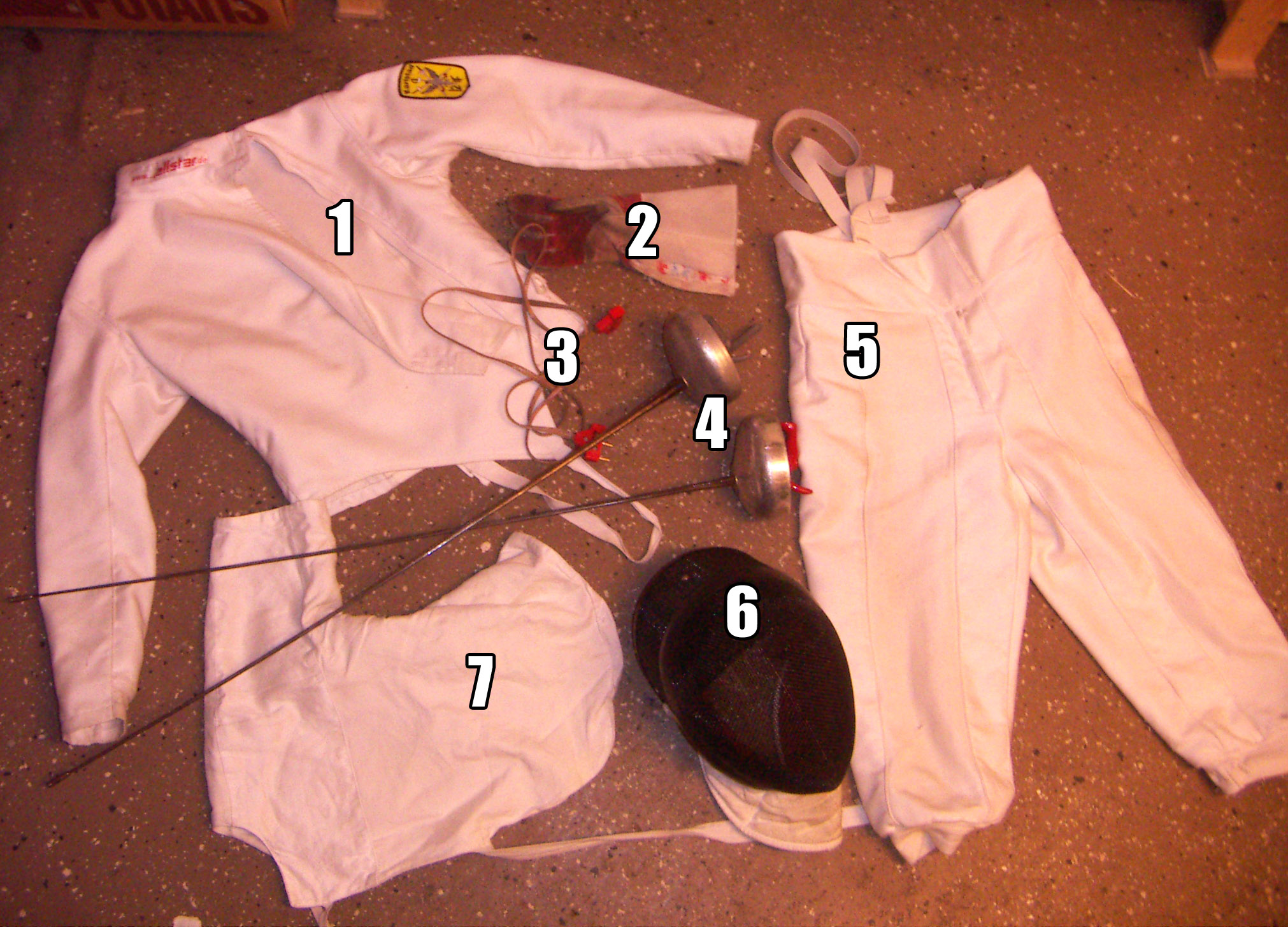
Sport fencing is a combat sport where two athletes fight with swords. It is one of only five sports that have been part of every modern Olympic Games since 1896. Fencers wear protective white jackets, masks, and gloves to stay safe.

There are three types of fencing weapons. The foil is a light, thin sword used for thrusting. The épée is heavier and the whole body is the target. The sabre is the fastest weapon and allows cutting actions.

A fencing match is called a bout. Athletes score points called "touches" by hitting their opponent with the tip or blade of the sword. The first to reach 15 touches wins.

Olympic fencing is a precision combat sport governed by the Fédération Internationale d'Escrime (FIE). It is one of the founding Olympic sports, present at every Summer Games since Athens 1896. Competitors score points — called "touches" — by striking a valid target on their opponent's body with their weapon.

Each of the three disciplines has distinct rules. The foil targets the torso only and follows the "right of way" rule, which determines which fencer has priority to score. The épée awards a touch for hitting any part of the body and has no right of way — simultaneous hits both score. The sabre targets the upper body and is the fastest and most aggressive discipline, allowing cutting actions in addition to thrusts.

Bouts are contested on a long, narrow strip called the piste, and electronic scoring systems register touches automatically through conductive equipment.

Olympic fencing represents the most institutionalised expression of Western sword-fighting tradition — a sport that emerged from the systematic codification of dueling practices developed in Renaissance Europe and subsequently transformed by the demands of modern athletic competition. Governed by the FIE since 1913, the sport maintains three disciplines that preserve distinct lineages of European swordsmanship.

The rules governing each weapon encode fundamentally different philosophies of combat. The foil's "right of way" convention — awarding priority to the first fencer to initiate a correctly formed attack — reflects an 18th-century pedagogical framework designed to teach tactical decision-making rather than simulate realistic combat. The épée, by contrast, rewards any touch on any surface, producing a more attritional, tactically complex game where defensive excellence is paramount. The sabre's cavalry heritage — targeting the upper body to simulate mounted combat — produces the most explosive, high-tempo bouts of all three disciplines.

The sport's evolution has been shaped by a persistent tension between its martial heritage and the imperatives of athletic spectacle — a tension most visible in ongoing debates about the increasing speed and decreasing readability of modern fencing.

Fencing

HEMA: Historical European Martial Arts

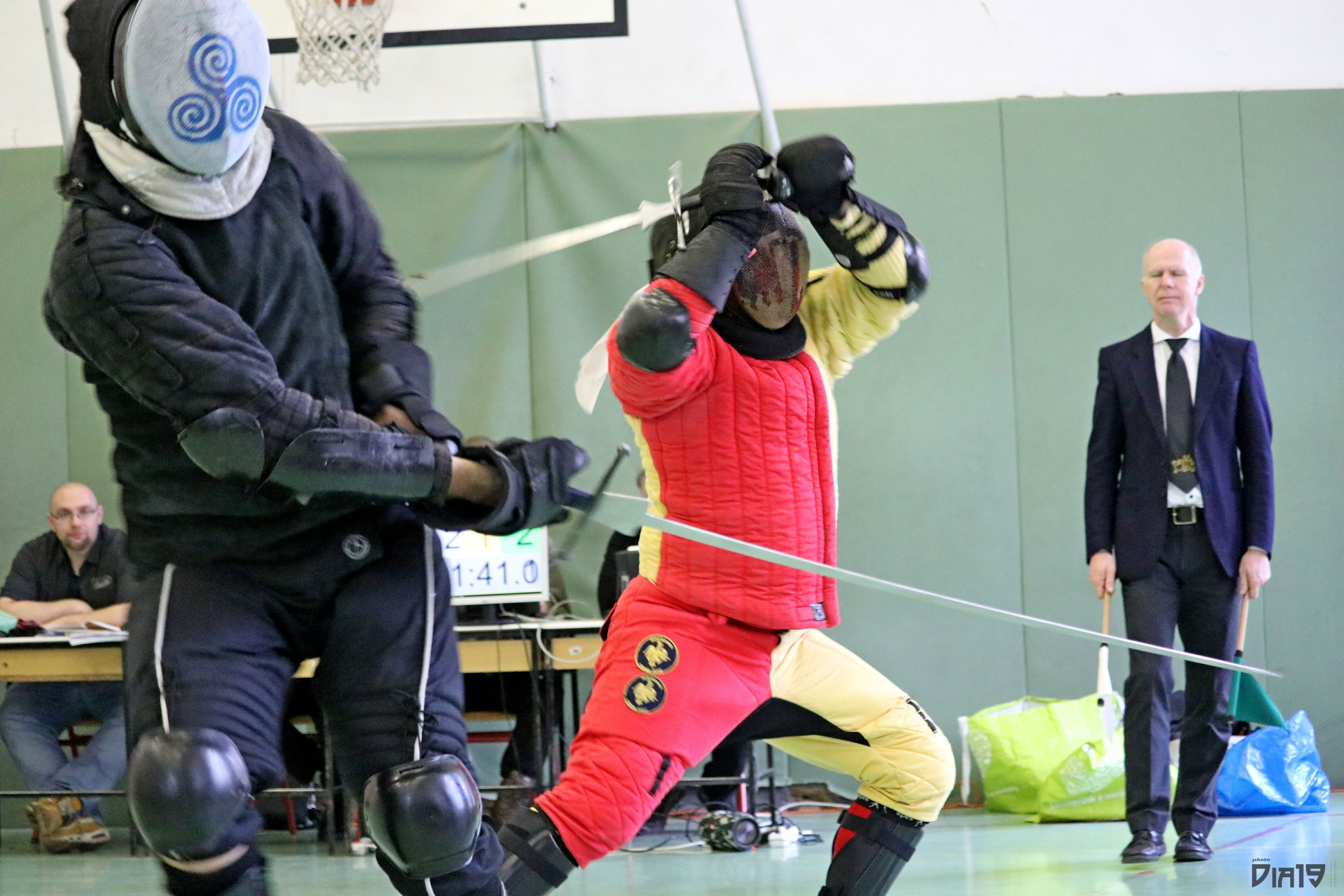
HEMA stands for Historical European Martial Arts. It is a movement where people study and practice old European fighting styles. Practitioners use ancient books and manuscripts from the Middle Ages and Renaissance to learn how knights and soldiers once fought.

The most popular weapon in HEMA is the longsword — a large, two-handed sword used in medieval Europe. Fighters also study the use of daggers, shields, pole weapons, and even wrestling techniques.

HEMA is growing quickly around the world. There are now thousands of clubs in Europe, North America, and Latin America, including Mexico. Participants wear protective armor during sparring and compete in tournaments.

Historical European Martial Arts (HEMA) is an academic and athletic movement dedicated to reconstructing and practising the fighting systems of medieval and Renaissance Europe. Practitioners study original combat manuals — known as fechtbücher (fighting books) — written by master swordsmen between the 13th and 17th centuries.

Key historical sources include the works of Italian master Fiore dei Liberi (Flos Duellatorum, c. 1410), German masters Johannes Liechtenauer and Joachim Meyer, and the anonymous English manual I.33 — the oldest known European sword-fighting manual, dating to around 1300. These texts describe systematic techniques for the longsword, dagger, spear, and unarmored wrestling.

Modern HEMA tournaments use steel simulators — replica swords with blunted edges — alongside protective masks, gloves, and jackets. The HEMA Alliance and the International Federation of Historical European Martial Arts (IFHEMA) now oversee a global competitive circuit with participants from over 50 countries.

Historical European Martial Arts represents a fascinating intersection of historical scholarship, athletic practice, and cultural identity — a movement that challenges the assumption that the martial traditions of medieval and Renaissance Europe were lost. The codification of European swordsmanship in the surviving corpus of fechtbücher is, paradoxically, more extensive than the documentary record preserved for many Asian martial arts.

The interpretive challenge at the heart of HEMA is significant: practitioners must reconstruct kinetic, embodied knowledge from static text and illustrations, inevitably producing competing interpretations of the same source material. This epistemological tension — between scholarly fidelity to historical sources and the pragmatic demands of athletic competition — generates ongoing methodological debates within the community about the relative authority of textual evidence versus empirical testing through sparring.

The movement's rapid globalisation — particularly its growth in Latin America, where clubs have proliferated in Mexico, Argentina, and Brazil — raises interesting questions about the relationship between cultural heritage and martial practice: who has the right to practise a tradition, and what does that practice mean when it occurs far from the culture that produced it?

HEMA Sword Fighting

Bohurt & Armored Combat Sports

Bohurt (also written "buhurt") is a sport where competitors fight in full metal armor, using blunted steel weapons. It looks like a real medieval battle. The goal is to knock your opponent to the ground or throw them off their feet.

Fighters wear authentic-looking plate armor that can weigh between 30 and 50 kilograms. Despite the heavy equipment, bohurt athletes are extremely fit and strong. Matches can be one-on-one duels or large team battles with up to 21 fighters on each side.

The most famous international bohurt competition is called the Battle of the Nations. Teams from over 40 countries compete every year in a large medieval-style arena. The sport has grown very popular in Mexico and across Latin America in recent years.

Bohurt — also known as armored combat sport or Historical Medieval Battles (HMB) — is a full-contact combat sport in which competitors fight wearing authentic reproductions of medieval armor. Unlike HEMA, which focuses on technical swordsmanship, bohurt prioritises physical dominance: the objective is to knock opponents to the ground using strikes, grappling, and throws, with points awarded for takedowns or eliminations.

Equipment requirements are strictly regulated by the International Medieval Combat Federation (IMCF). Competitors must wear period-accurate armor made from steel — typically 14th or 15th-century European plate designs — and fight with blunted steel weapons including swords, maces, pole axes, and shields. Full sets of armor weigh between 25 and 55 kilograms, demanding extraordinary levels of strength and cardiovascular fitness from athletes.

The Battle of the Nations — the sport's premier annual championship — attracts national teams from over 40 countries and has been held in locations including Israel, Croatia, France, and Spain. The sport has found a particularly enthusiastic following in Eastern Europe, Russia, and increasingly in Latin America, where the visual drama of armored combat resonates strongly with audiences.

Bohurt occupies a fascinating and contested position within the broader spectrum of historical martial arts — a discipline that consciously prioritises spectacle, physicality, and competitive intensity over historical fidelity. Critics within the HEMA community argue that the sport's emphasis on attrition and athleticism over technical swordsmanship produces fighting patterns that bear little resemblance to historical combat methodology; proponents counter that full-contact armored fighting demands a form of embodied engagement with medieval martial culture that no amount of scholarly reconstruction can replicate.

The sport's governance has been complicated by jurisdictional disputes between rival international bodies — the IMCF, the HMB International, and various national federations — reflecting broader tensions about authority, standardisation, and the commercialisation of historical martial identity. The question of armor authenticity is particularly contentious: the requirement for period-accurate equipment creates significant financial barriers to participation, while the production of functional replica armor has generated a substantial artisan economy.

The sport's rapid growth in Mexico and Latin America — where it intersects with existing traditions of historical costuming, role-playing gaming culture, and a growing appetite for alternative combat sports — illustrates how medieval European martial heritage can acquire new cultural meanings when transplanted into radically different social and historical contexts.

Armored Combat

Kendo — The Way of the Sword

Kendo is a Japanese martial art that means "the way of the sword." It developed from the training methods of samurai warriors. Today, kendo is practiced by millions of people around the world, both as a sport and as a path of personal development.

In kendo, practitioners use a shinai — a practice sword made of four bamboo staves — and wear protective armor called bogu, which covers the head, wrists, body, and waist. Competitors score points by striking valid targets with the correct technique and spirit.

Kendo is not only about fighting. Students learn kata — formal sequences of movements performed with a wooden sword — which teach the fundamental principles of the art. Respect, discipline, and self-improvement are central values in kendo.

Kendo — literally "the way of the sword" — is a modern Japanese martial art descended from the swordsmanship traditions of the samurai class. It emerged in its current form during the Meiji era (1868–1912), when the abolition of the samurai class created a need to preserve sword training as a cultural and moral practice rather than a military necessity.

The practice environment of kendo is structured around two complementary pillars. Keiko (training), conducted with the shinai and full bogu armor, develops speed, timing, and competitive technique. Kata practice, performed with a wooden bokken, preserves the classical principles and historical techniques of Japanese swordsmanship. Together, these two elements reflect kendo's dual identity as both a competitive sport and a budō — a martial "way" focused on character formation.

The All Japan Kendo Federation (AJKF) and the International Kendo Federation (FIK) govern the sport globally. The World Kendo Championships have been held every three years since 1970, with Japan historically dominant. Kendo has experienced significant growth in Latin America, particularly in Mexico, Brazil, and Argentina, where Japanese diaspora communities established the first clubs.

Kendo's historical trajectory illuminates the complex process by which a martial tradition is transformed under the pressures of modernisation, nationalism, and globalisation. The Meiji-era systematisation of swordsmanship into a unified national practice was explicitly ideological — kendo was incorporated into the Japanese school curriculum as an instrument of militarist nationalism, a role that led to its prohibition by Allied occupation authorities following Japan's defeat in 1945.

The postwar reconstruction of kendo as a budō — emphasising character development, mutual respect, and the philosophical concept of do (way) — represented a deliberate distancing from its militarist past. This reconstitution as a sport-and-philosophy rather than a combat system enabled kendo's reintegration into Japanese education and its subsequent internationalisation. The tension between kendo's identity as a uniquely Japanese cultural heritage and its aspirations to universal sportive values continues to generate debate, particularly around proposals for its inclusion in the Olympic Games.

The concept of martial lineage — the unbroken transmission of knowledge through teacher-student relationships across centuries — distinguishes kendo from HEMA, which must reconstruct knowledge from historical texts. This living continuity of tradition is central to kendo's cultural authority, though scholars note that modern kendo is itself a relatively recent construction shaped as much by 19th-century nationalism as by authentic samurai practice.

Kendo

Weapons & Equipment

Different sword fighting sports use different weapons and protective equipment. Here are some of the most important:

  • Foil, épée, and sabre: The three Olympic fencing weapons are made of lightweight flexible steel. The blade is the long metal part, and a bell-shaped hand guard called a "guard" protects the hand
  • Shinai: The kendo practice sword is made of four bamboo staves held together by leather fittings. It is designed to absorb impact safely during full-force strikes
  • Longsword simulators: HEMA practitioners use steel swords with blunted edges and rounded tips, weighing between 1.2 and 1.6 kilograms
  • Protective gear: All sword sports use protective masks, gloves, and jackets. Kendo uses full bogu armor; bohurt uses complete plate armor made of steel

The diversity of weapons across sword fighting disciplines reflects both their different historical origins and the distinct demands of safe athletic practice:

  • Olympic fencing weapons: All three weapons feature a flexible maraging steel blade with a blunted tip. The foil (weight: ~500g) and épée (~770g) are thrusting weapons; the sabre (~500g) has a cut-and-thrust design. Electronic scoring systems detect touches through conductive lamé jackets and blade-tip sensors
  • Kendo equipment: The shinai consists of four bamboo slats bound by leather, typically 114–120cm in length for adults. The bogu armor set — comprising the men (head), kote (gloves), dō (chest), and tare (waist) — is crafted from lacquered bamboo, leather, and cloth. Kata practice uses a solid oak or red oak bokken
  • HEMA simulators: Steel longsword simulators are engineered for safety while retaining realistic handling. Protective gear for HEMA sparring typically combines a fencing mask reinforced to 1600N+ puncture resistance, padded jacket, thick gloves, and forearm guards
  • Bohurt armor: Full plate armor reproductions are typically based on 14th–15th century European designs and must meet IMCF specifications. Sets can cost between $2,000 and $10,000 depending on craftsmanship and materials

The material culture of sword fighting sports encodes the philosophical and functional priorities of each tradition in ways that reward close analysis:

  • The paradox of the training weapon: Every sword sport faces the fundamental challenge of enabling full-intensity practice while preventing serious injury — a problem solved through different compromises in each tradition. The foil and épée achieve safety through flexibility and a blunted tip; the shinai through the energy-absorbing properties of bamboo; HEMA simulators through mass reduction and edge-blunting; bohurt through the protective enclosure of plate armor. Each solution shapes the resulting fighting style in ways that diverge from the historical combat it purports to represent
  • The blade as cultural object: The design of sword blades across cultures reflects distinct metallurgical traditions and combat philosophies — the differential hardening of Japanese blades (hamon), the spring-tempered flexibility of European fencing blades, and the high-carbon construction of historical longswords each embody centuries of accumulated technical knowledge
  • The economics of equipment: Access to sword sports is significantly shaped by material costs. Olympic fencing gear costs between $500 and $2,000; a full kendo bogu set between $300 and $3,000; HEMA equipment between $500 and $1,500; bohurt armor between $2,000 and $10,000. These cost differentials create structural inequalities in participation that intersect with geography, social class, and national sporting infrastructure
Sword Equipment

Other Sword Fighting Styles

There are many other sword fighting traditions practiced around the world:

  • Iaido: A Japanese art focused on the smooth and controlled drawing of the sword from its scabbard. Practitioners perform slow, precise movements called kata against imaginary opponents. The goal is mental calm and perfect technique
  • Eskrima / Arnis: A Filipino martial art that uses sticks, knives, and swords. It is the national martial art of the Philippines. Practitioners train with rattan sticks before moving to bladed weapons
  • Wushu: Chinese martial arts include many sword forms using the jiàn (straight sword) and the dāo (curved sword). These arts combine athletic skill with artistic expression
  • Esgrima criolla: A traditional Argentine knife and sword fighting style. It is part of the gaucho (cowboy) cultural heritage of the South American pampas

Beyond the major disciplines, a rich diversity of sword and blade fighting traditions exists worldwide, each reflecting a distinct cultural context:

  • Iaido: The Japanese art of the sword draw emphasises meditative precision over combative application. Practitioners perform solo kata against imaginary opponents using either a live-bladed katana (iaito) or a training sword (mogito). Judged competitions assess technical correctness, posture, and mental presence
  • Eskrima / Arnis / Kali: The national martial art of the Philippines is distinctive for its "weapons-first" pedagogy — practitioners develop stick and blade skills before empty-hand techniques, on the principle that armed combat is more likely than unarmed. Its efficiency and adaptability have made it highly influential in military and law enforcement training worldwide
  • Chinese sword arts: The jiàn (double-edged straight sword) and dāo (single-edged curved sword) feature prominently in both competitive wushu and traditional gongfu practice. Chinese sword arts emphasise flowing, circular movements and have been shaped by Taoist philosophical principles
  • Silat: Southeast Asian martial traditions, particularly from Malaysia and Indonesia, incorporate sophisticated blade work using the keris (a ceremonially significant wavy-bladed dagger) alongside straight swords and machetes

The global diversity of sword fighting traditions offers a remarkable lens through which to examine how different cultures encode martial knowledge, philosophical values, and social identity into the practice of armed combat:

  • The contrast between iaido and kendo: These two Japanese disciplines represent opposing poles of the sword arts spectrum — iaido's solitary, meditative kata practice versus kendo's combative, competitive energy. Their coexistence within Japanese budō culture reflects a deliberate philosophical position: that martial training must cultivate both the capacity for decisive action and the capacity for stillness and self-reflection
  • Eskrima's pedagogical inversion: Filipino martial arts' weapons-first approach challenges the assumption — embedded in most other traditions — that empty-hand skills precede and underpin weapons training. This inversion reflects a pragmatic combat philosophy shaped by the historical reality of blade culture in the Philippine archipelago, and has proven extraordinarily influential on contemporary combatives training
  • The martial lineage problem across traditions: The question of authenticity and continuity haunts all historical martial arts. Japanese traditions claim unbroken transmission but have been extensively modified by 19th and 20th-century systematisation; HEMA reconstructs from manuscripts without living lineage; Filipino arts claim continuous practice but face similar modernisation pressures. Each tradition negotiates the tension between historical fidelity and contemporary relevance in distinctive ways
Martial Arts

The Rising Global Popularity

Sword fighting sports are becoming more popular all over the world. There are several reasons for this:

  • Movies and television: Films and TV shows featuring sword fights — such as Game of Thrones, martial arts movies, and historical dramas — have inspired millions of people to try these arts for themselves
  • Online videos: YouTube channels dedicated to HEMA, kendo, and fencing have millions of subscribers. Watching exciting sword fights online makes people want to participate
  • Video games: Popular games featuring sword fighting have introduced young people to the history and styles of different fighting traditions
  • Mexico and Latin America: The number of sword fighting clubs in Mexico has grown rapidly. Cities like Mexico City, Guadalajara, and Monterrey now have active HEMA, kendo, and bohurt communities. The sport appeals to people interested in history, fitness, and cultural heritage

Sword fighting sports have experienced remarkable growth in the 21st century, driven by a convergence of cultural, technological, and social factors:

  • Media and popular culture: The global success of fantasy and historical fiction — from Game of Thrones to the Witcher franchise — has generated unprecedented public interest in historical combat. HEMA practitioners and fencing coaches have benefited directly from this cultural moment, with club enrolments typically spiking after major releases
  • Digital communities: YouTube channels such as Scholagladiatoria, Skallagrim, and various kendo federations have built audiences of millions, normalising sword sports as accessible, serious athletic disciplines. Social media communities have also been crucial in connecting practitioners globally and creating supportive networks for beginners
  • The alternative combat sports market: As traditional martial arts like karate have faced declining interest among younger demographics, sword arts have benefited from their novelty, visual drama, and strong historical and philosophical content
  • Latin America: Mexico, in particular, has seen explosive growth in all major sword disciplines. The Mexican HEMA community has grown from a handful of clubs in 2010 to over 80 active groups by 2024. Kendo has deep roots through Japanese-Mexican diaspora communities, while bohurt has attracted a new generation of enthusiasts drawn to the sport's physical demands and medieval aesthetics

The contemporary revival of sword fighting sports constitutes a significant cultural phenomenon whose dimensions exceed the merely recreational — it reflects deeper currents of nostalgia, embodied identity-seeking, and resistance to the dematerialisation of modern life:

  • The embodiment thesis: Sociologists of sport have noted that sword arts attract practitioners who seek a form of physical engagement that is simultaneously intellectually demanding, historically rooted, and physically transformative. Unlike gym-based fitness, sword training offers a narrative framework — a tradition, a lineage, a set of values — that positions the practitioner within a meaningful historical continuum. This appeal to embodied history resonates particularly strongly in a cultural moment characterised by digital abstraction and the erosion of manual craft traditions
  • Popular culture as recruitment pipeline: The relationship between sword arts and fantasy media is more complex than simple inspiration. The HEMA community has both benefited from and actively shaped popular cultural representations of historical combat — HEMA practitioners serve as fight choreographers and historical consultants for major productions, creating a feedback loop between scholarship, sport, and entertainment
  • The Mexican case as cultural hybridisation: The growth of sword arts in Mexico illustrates a broader pattern of cultural hybridisation — the adoption and adaptation of traditions from distant historical and geographical contexts into local identities. Mexican HEMA practitioners often articulate their practice in terms of universal human heritage rather than European cultural property, while kendo communities navigate the complex dynamics of Japanese cultural diplomacy and diaspora identity. The result is a vibrant, syncretic sword arts culture that is distinctly Mexican in character while drawing on global traditions
Sword Fighting Community

Key Takeaways

Remember these important points from the lesson:

  • Sport fencing is one of the oldest Olympic sports, using three different weapons: the foil, épée, and sabre
  • HEMA (Historical European Martial Arts) uses ancient manuscripts to reconstruct medieval European sword fighting techniques
  • Bohurt is full-contact armored combat where fighters wear real plate armor and fight in large team battles
  • Kendo is the Japanese "way of the sword," practiced with a bamboo shinai and focused on both sport and personal development
  • Sword fighting sports are growing around the world, including in Mexico, driven by popular culture, online communities, and the appeal of history and tradition

Essential takeaways from this lesson:

  • Sword fighting spans multiple traditions: Olympic fencing, HEMA, bohurt, and kendo each represent distinct approaches to the sword — shaped by different historical origins, cultural values, and competitive formats
  • Equipment reflects philosophy: The choice of training weapon in each tradition — from the shinai to the HEMA steel simulator to the Olympic foil — encodes the values and priorities of each discipline
  • Global diversity is rich: Beyond the major disciplines, traditions such as iaido, eskrima, and Chinese sword arts demonstrate the universality of humanity's relationship with the sword across cultures
  • The revival is real and significant: Participation in sword arts is growing rapidly worldwide, driven by media, online communities, and a hunger for historically grounded physical practice
  • Mexico and Latin America are important and growing centres of sword arts culture, with active communities in HEMA, kendo, and bohurt — demonstrating that these traditions belong to anyone who chooses to embrace them

Salient conclusions from this lesson:

  • The sword as cultural signifier: Across all traditions examined, the sword functions as far more than a weapon — it is a vehicle for philosophical values, historical identity, and personal transformation. The persistence of sword arts in modernity reflects an enduring human need to engage with the past through physical practice
  • The authenticity problem: Every sword fighting tradition navigates the tension between historical fidelity and contemporary relevance differently. HEMA's manuscript-based reconstruction, kendo's martial lineage, and bohurt's emphasis on physical immersion represent fundamentally different epistemologies of martial knowledge
  • The codification legacy: The systematic recording of sword fighting techniques — whether in medieval European fechtbücher or modern FIE rulebooks — has been the decisive factor in the survival and revival of these traditions, underlining the profound relationship between written knowledge and embodied practice
  • Globalisation and hybridisation: The worldwide spread of sword arts — and their particular vitality in Latin America — demonstrates that martial traditions are not culturally fixed properties but dynamic practices that acquire new meanings and identities as they travel across cultural borders
Sword Arts

Lesson Complete!

Continue Your Learning

Vocabulary Flashcards

Blade
Click to see definition
The long metal part of a sword used for cutting or thrusting
Guard
Click to see definition
A defensive position held to protect against an opponent's attack
Parry
Click to see definition
To block or deflect an opponent's attack with your weapon
Lunge
Click to see definition
A long forward thrust used to reach and strike an opponent
Duel
Click to see definition
A formal combat between two people, historically fought with swords or pistols
Armor
Click to see definition
Protective metal or padded clothing worn during combat
Tournament
Click to see definition
A competition where fighters or athletes compete against each other over several rounds
Stance
Click to see definition
The position in which a fighter stands when ready to fight or defend
Épée
Click to see definition
The heaviest Olympic fencing sword, where the entire body is the valid target
Foil
Click to see definition
A light fencing sword where only the torso counts as a valid target
Sabre
Click to see definition
A fencing weapon where both cutting and thrusting actions can score points
Piste
Click to see definition
The long narrow strip on which fencing bouts take place
Riposte
Click to see definition
An offensive action made immediately after successfully blocking an opponent's attack
Bout
Click to see definition
A single match or competition period in fencing or other combat sports
Sparring
Click to see definition
Practice fighting with a partner to develop and test techniques in a safe environment
Footwork
Click to see definition
The movement of the feet used to control distance, balance, and positioning during combat
HEMA
Click to see definition
Historical European Martial Arts — a movement dedicated to reconstructing and practising medieval and Renaissance European fighting systems from historical manuscripts
Bohurt
Click to see definition
A full-contact armored combat sport derived from medieval tournament fighting, in which competitors wear steel plate armor and fight with blunted steel weapons
Iaido
Click to see definition
A Japanese martial art focused on the smooth, controlled drawing and cutting of the sword, emphasising meditative precision over combative application
Kata
Click to see definition
A pre-arranged sequence of movements used in martial arts to train techniques, principles, and mental discipline through repetition
Shinai
Click to see definition
A practice sword made of four bamboo staves used in kendo, designed to allow full-force strikes while minimising the risk of serious injury
Codification
Click to see definition
The process of formally recording and organising a set of rules, techniques, or principles into a systematic body of knowledge
Longsword
Click to see definition
A large European sword with a long blade designed to be used with two hands, the most widely studied weapon in the HEMA community
Martial Lineage
Click to see definition
The tradition of passing down fighting knowledge from teacher to student across generations, providing a living chain of transmission for a martial art

Interactive Quiz

Question 1 of 8

Writing Practice

Writing Task

Sword fighting arts have experienced a remarkable global revival in recent decades. Choose two of the combat disciplines discussed in this lesson — such as Olympic fencing, HEMA, bohurt, or kendo — and compare their approaches to the sword. Discuss the history, equipment, and cultural appeal of each discipline. Why do you think people today are drawn to these ancient fighting arts? Use vocabulary from the lesson in your response.